Industrial has moved from expansion mode to execution mode.
The Signal
“Industrial demand remains real.
PIER Staff
But the market is no longer forgiving.
Well-located, high-function buildings win.
Average product negotiates.
This cycle rewards operators who treat real estate as operational leverage — not just square footage.”
What’s Happening
1) Concessions Are Quietly Increasing
Free rent and TI packages are returning on second-generation big-box space. Top-tier new construction still commands premium positioning — but pricing power has moderated.
2) Vacancy Is Bifurcated
Bulk space (250,000+ SF) is taking longer to absorb.
Small- to mid-bay (10,000–75,000 SF) remains comparatively tight in infill submarkets.
3) Capital Is Selective
Lenders want strong sponsorship and clear exit visibility.
Spec starts are down. Build-to-suit activity is steady.
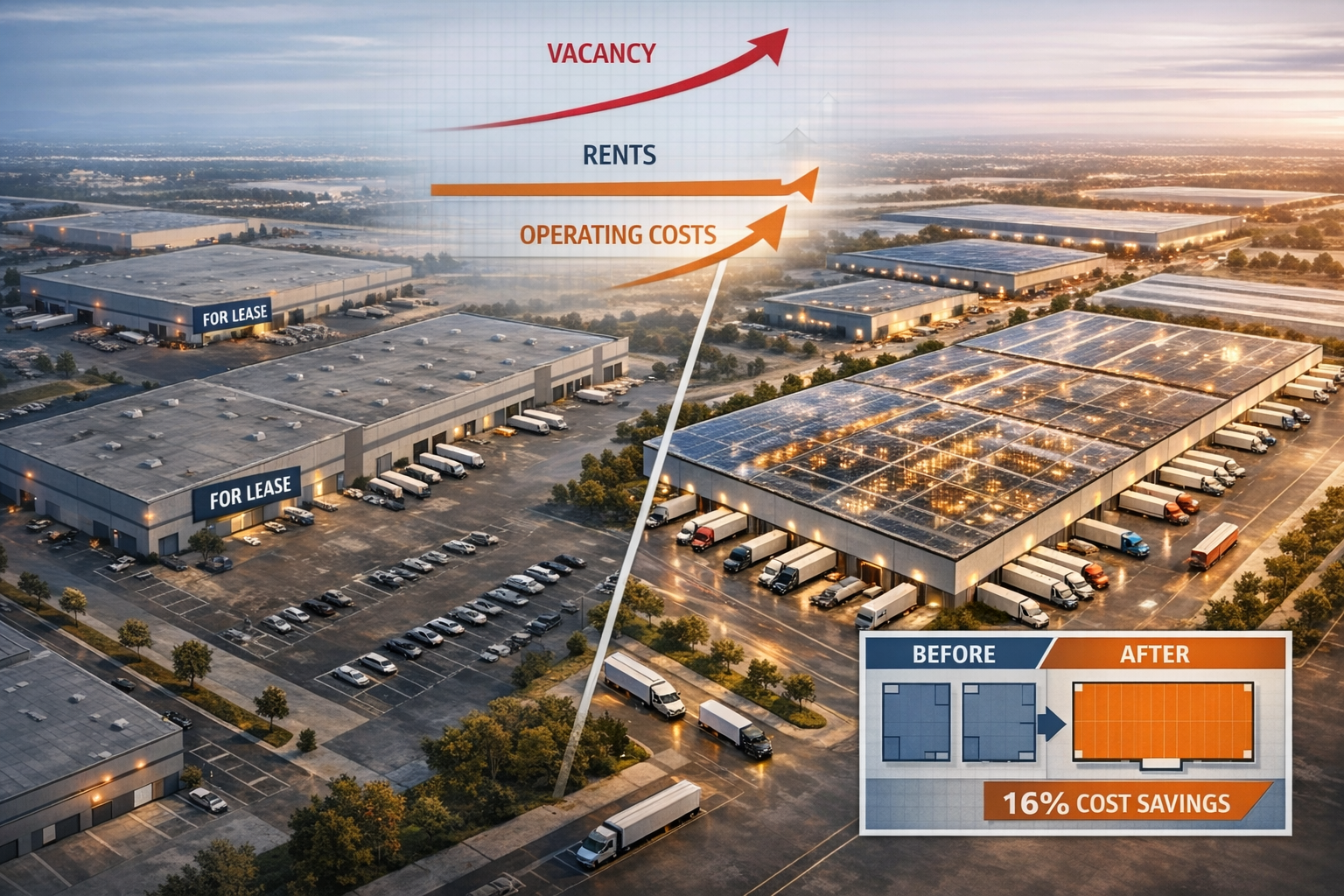
4) Operating Costs Are the Real Story
Insurance, taxes, and labor continue rising.
Tenants are evaluating buildings based on total operating efficiency — not just base rent.
For a local view, see our current industrial vacancy trends.
Real-World Impact
A regional e-commerce distributor leased 210,000 SF in 2022 at peak demand. By late 2025, order velocity normalized and 30% of the space was idle.
Instead of renewing, they:
- Consolidated into 150,000 SF in a newer infill facility
- Installed higher-density racking
- Optimized pick-and-pack layout
Results:
- Reduced occupancy cost by ~16%
- Shortened delivery windows due to better highway access
- Lowered labor turnover because of improved facility quality
The move wasn’t contraction — it was margin protection.
The question is no longer “How much space?”
It’s “How efficiently does this space perform?”
That’s the signal.
– Ryan