

Savannah’s hospitality market is softening — and that may be exactly why experiential concepts are gaining ground.
In recalibrating markets, differentiation becomes the strategy.
The Signal
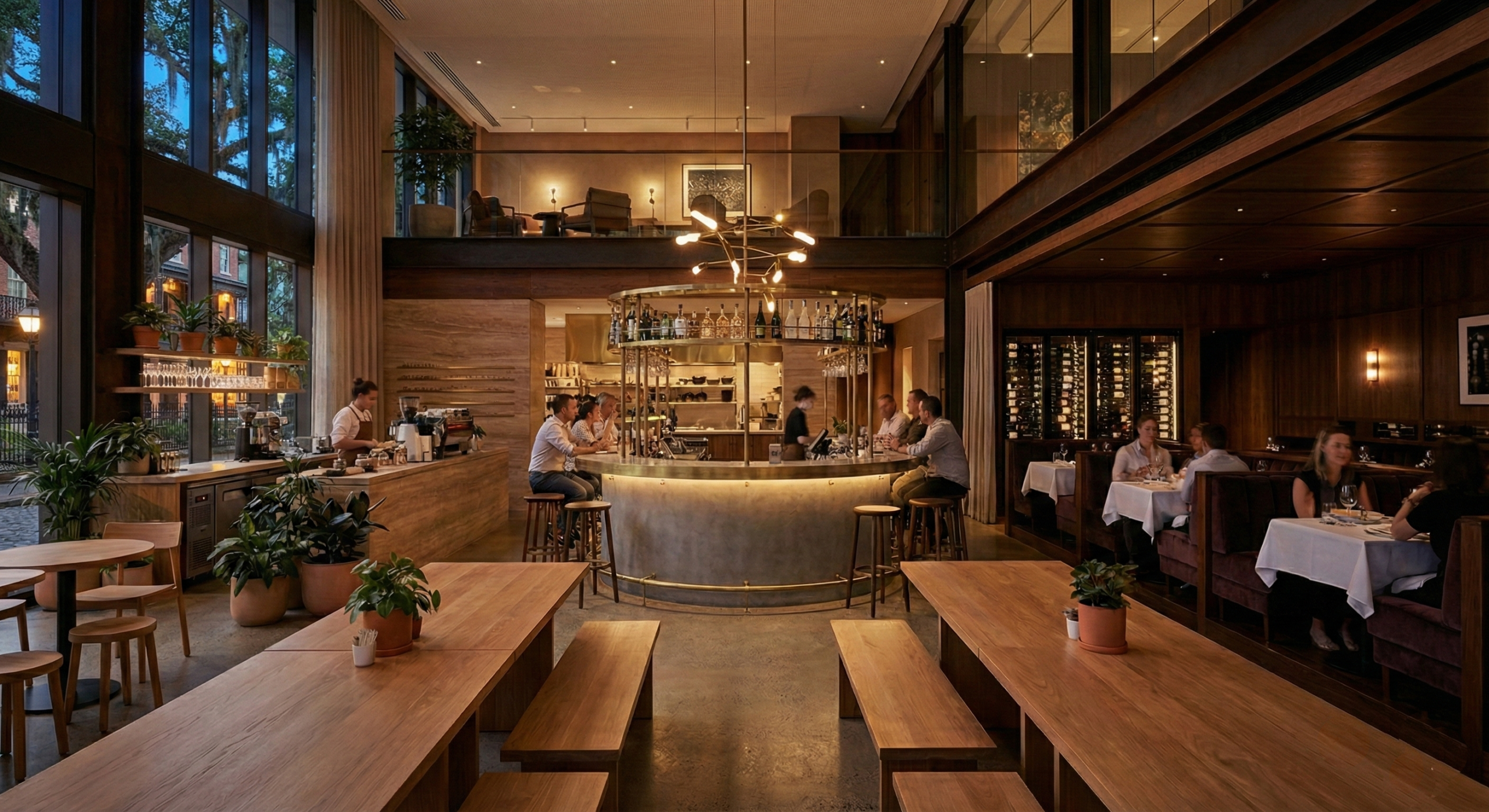
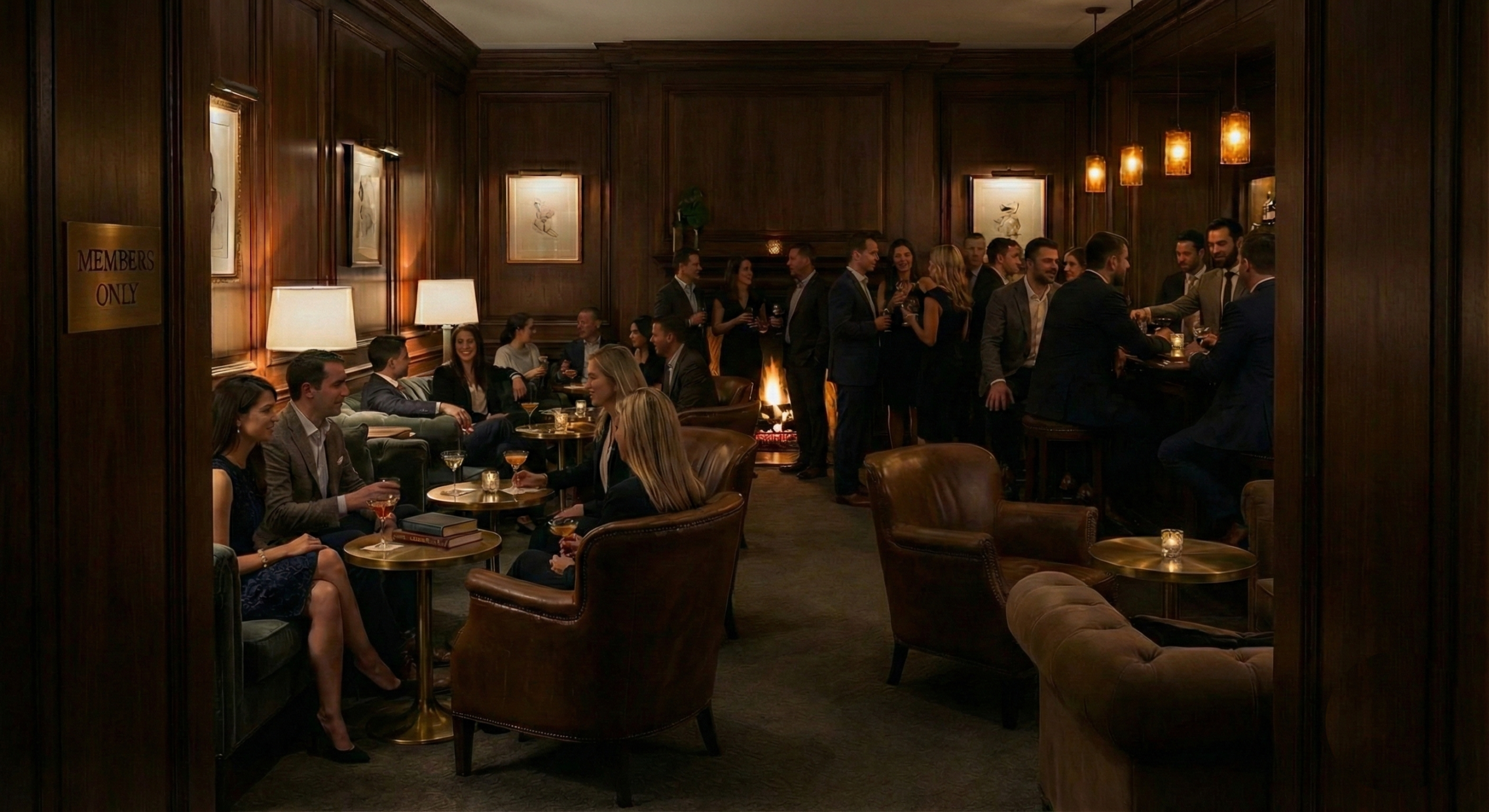
Hospitality veteran Jay Trikha is developing Elsewhere, an ~8,000 SF multi-room premium lounge concept on East Bay Street in Savannah’s Historic District. The model blends daytime dining with evening membership-style social access across tiered spaces.
This isn’t just another restaurant. It’s a layered, access-driven, experience-first environment built to diversify revenue beyond traditional food and beverage.
- Diversify revenue beyond food & beverage
- Introduce membership dynamics
- Extend dwell time
- Capture multiple dayparts under one roof
Short-term rental data shows Savannah averaging ADR near $290 with occupancy in the mid-40% range — a reminder that discretionary travel demand is more seasonal and volatile than it was two years ago.
In softer markets, operators pivot toward differentiation. Landlords must adapt accordingly.
Hospitality veteran Jay Trikha is developing Elsewhere, an ~8,000 SF multi-room premium lounge concept on East Bay Street in Savannah’s Historic District. The model blends daytime dining with evening membership-style social access across tiered spaces.
This isn’t just another restaurant. It’s a layered, access-driven, experience-first environment built to diversify revenue beyond traditional food and beverage.
Bottom Line
Experiential tenants are not traditional retail. They require flexible layouts, capital-intensive buildouts, extended stabilization periods, and hybrid revenue models.
If landlords want the upside, leases must reflect the risk — guaranteed minimums, seasonal step-ups, percentage rent, and performance triggers.
Savannah isn’t slowing down. It’s recalibrating. Operators who build layered experiences will compete differently. Landlords who structure intelligently will win.
That’s the signal.
— Ryan